Education in the 21st century means looking at the whole person, to meet the ever-changing and ongoing demands of life in all of its aspects.
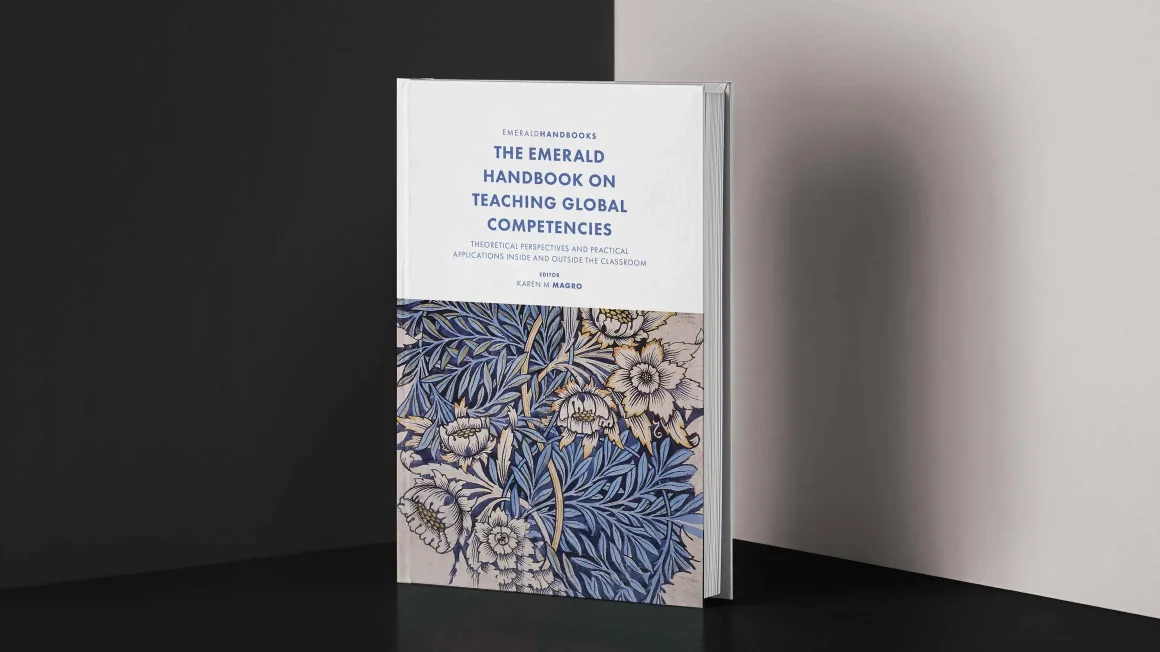
A new book, The Emerald Handbook on Teaching Global Competencies: Theoretical Perspectives and Practical Applications Inside and Outside the Classroom, edited by UWinnipeg’s Dr. Karen Magro, explores the future of learning.
Learners continue to be faced with technological advancements, geopolitical conflicts, the movement of people across borders, and climate crises that deplete natural resources. A visionary and transformative education would work to create a learning climate that encourages personal agency, problem solving, and positive social change.
Educators recognize that learners could develop key global competencies: skills that translate across work, academic, and community settings. These skills include critical thinking, creativity, collaboration, communication, citizenship, and connection to self. They work together and develop over time throughout a person’s life.
People with these skills can adapt to new technologies, be lifelong learners, and live richer, fuller lives. Global competencies involve interdisciplinary thinking, multiliteracies, perspective taking, and connecting theory and practice. A complex world requires complex and integrative thinking. For example, sustainability solutions might draw on life sciences, the humanities, and new technologies.
Dr. Magro is a professor in the Faculty of Education and says the book fills a need in education. “Manitoba and other provinces are emphasizing the need for educators to integrate global competencies into the curriculum at all levels. There was a need to explore the way educators conceptualize global competencies into everyday practice from kindergarten to higher education. The importance of lifelong learning is essential.”
Through case studies, empirical research, and innovative pedagogies, chapter authors demonstrate how dynamic, multimodal, lifelong learning environments can cultivate the key global competencies needed to bridge cultural divides, empower communities, and promote sustainable development.
International effort with local contributions
“This book is an international effort that involved scholars from Canada, the US, the UK, Finland, Greece, Malta, Singapore, New Zealand, and Australia,” said Dr. Magro. “The authors explore key components of global competencies: emotional and social literacies, creativity, critical thinking, collaboration, belonging, and citizenship. The ideas in this book can be applied in multidisciplinary ways across varied learning contexts.”
The book also includes contributions from other UWinnipeg faculty members, including Dr. Catherine-Laura Dunnington (Education), Dr. Karen Froman (History), and Dr. Lloyd Kornelson (Global College/Education). University of Manitoba education professors such as Dr. Robert Mizzi, Dr. Bruno Oliveria Jayme, Dr. Lilian Pozzer, and Ph.D. student Sara Ragoub also contributed chapters.
Each chapter has a different focus, and the book champions an integrated approach that fosters emotional and social intelligence, creative problem solving, and interdisciplinary thinking, while also valuing transcultural insights and Indigenous knowledge. The authors challenge conventional models that call for a rethinking of what it means to be educated. A deeper level of learning is the focus and catalyst for creating resilient, inclusive, and globally engaged communities.
The Emerald Handbook on Teaching Global Competencies: Theoretical Perspectives and Practical Applications Inside and Outside the Classroom is published by Emerald Publishing Limited and is available September 14, 2026.