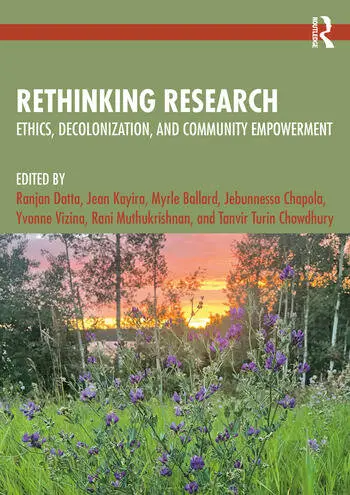
Dr. Yvonne Vizina, Associate Professor in the Faculty of Education, was part of the editorial team for the new book, Rethinking Research: Ethics, Decolonization, and Community Empowerment, published by Routledge.
This ground-breaking volume demands a fundamental rethinking of how research is conducted with—and accountable to—communities. Moving beyond institutional compliance and procedural checklists, the work calls for an ethics grounded in responsibility, reciprocity, and knowledge sovereignty, challenging researchers to reimagine their relationships with research participants and communities.
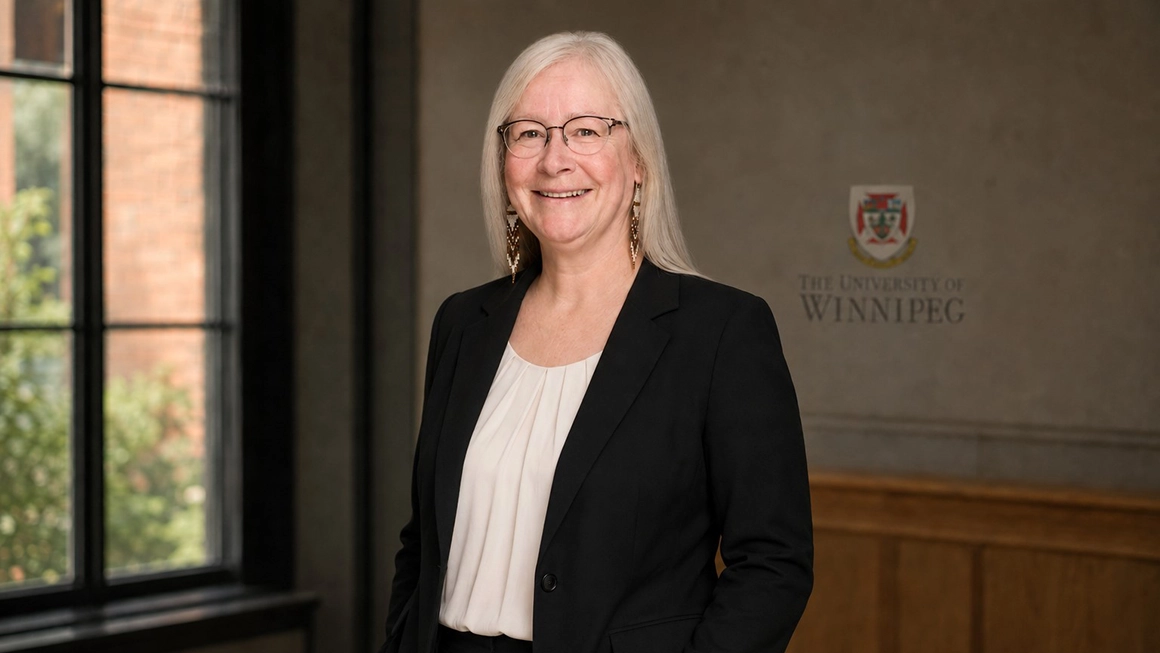
A respected Métis scholar, educator, and academic leader, Dr. Vizina brings extensive experience in innovative teaching, curriculum development, Indigenous education, sustainability, land-based learning, and faculty mentorship. Throughout her career, she has championed educational approaches that connect learning with community, sustainability, reconciliation, and real-world impact. As an Associate Professor in the Faculty of Education and the University’s Indigenous Research Excellence Chair, she has worked collaboratively with Indigenous communities, educators, and researchers to bridge Indigenous and Western knowledge systems and support transformative educational practices.
“What gives me hope for the future is the extraordinary depth of scholarship and numbers of researchers who are committed to understanding and addressing the realities experienced by Black, Indigenous, immigrant, and other communities worldwide,” said Dr. Vizina. “In a century defined by environmental, social, and cultural challenges, sustainability and land-based knowledges offer essential guidance, reminding us that our futures depend on learning to live in respectful relationship with one another and with the Earth.”
Bringing together Indigenous, Black, immigrant, and land-based perspectives, the contributors confront the colonial and extractive logics that continue to shape mainstream research ethics. They advocate for relational accountability, continuous consent, and shared decision-making as essential foundations for just and transformative scholarship. Through personal decolonization narratives, critiques of institutional ethics boards, and practical frameworks for community-led governance, this book equips scholars, community organizers, and policymakers with concrete strategies to dismantle power imbalances and foster equitable research partnerships.
Essential reading for anyone committed to research as a tool for justice rather than extraction, Rethinking Research offers a radical vision of scholarship that centers community voices and collective well-being, and is available now.