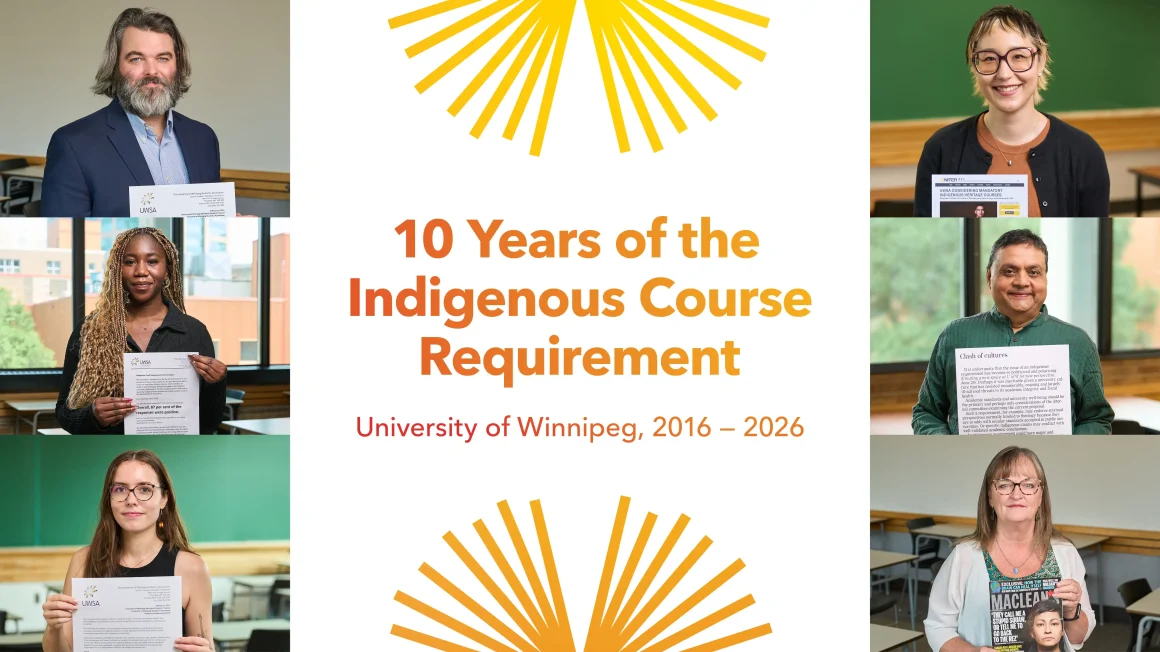
UWinnipeg celebrates 10 years of committing to Truth and Reconciliation through education, and the mandatory Indigenous Course Requirement (ICR).
In honour of this milestone, a UWinnipeg interdisciplinary research group has been awarded a Social Sciences and Humanities Research Council (SSHRC) Partnership Development Grant to undertake a two-year program to preserve, celebrate, and analyze the Indigenous Course Requirement at the UWinnipeg since its implementation in 2016. The project will include four branches: an archive collection; celebratory lunches; studies and surveys; and a public history project.
UWinnipeg was one of the first post-secondary institutions in North America to institute a mandatory ICR to learn about Indigenous Peoples as part of completing an undergraduate degree.
For myself, taking Indigenous history courses at UWinnipeg was instrumental in preparing me for my future in healthcare and solidifying my connection to my Métis heritage.
Emma Anderson
The ICR at UWinnipeg began as a student-led initiative. The students believed the ICR would help address racism on campus and create a better understanding of the founding and continuing history of North America.
What makes the ICR interesting, is that it is not just one course. Currently there are over 100 unique courses in a variety of topics across disciplines that students can choose to meet the requirement.
Since its inception in fall 2016, it is estimated that there have been more than 22,000 registrants in ICR courses. As the 10 years of ICR’s effects are reviewed, some students who are sharing their experiences have found the ICR beneficial.
Student voices
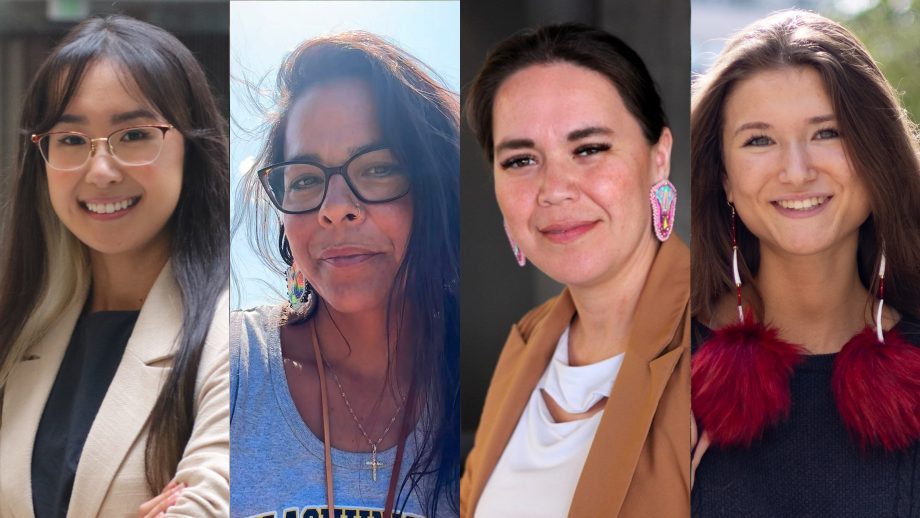
One of these students, alumna Emma Anderson (BSc 20) said, “For myself, taking Indigenous history courses at UWinnipeg was instrumental in preparing me for my future in healthcare and solidifying my connection to my Métis heritage.”
Anderson won the 2020 Indigenous History Essay Prize in 2020. She graduated with a Bachelor of Science in neuroscience and a minor in history with a concentration in Indigenous history and began medical school at the University of Manitoba post her graduation at UWinnipeg.
Originally from Calgary, another Indigenous History Essay Prize winner, Rayna Anderson, and former Wesmen Basketball Scholar also shared the importance of the ICR.
“I decided to take Indigenous history for my ICR because it is important for everyone to be aware of the impact historical events had on many lives,” said Anderson. “The lack of understanding surrounding Indigenous history is something that must be acknowledged. In order to grow the inclusivity of our society we must become educated in all people’s history. This is why I decided to take this course and why I encourage others do the same.”
As UWinnipeg student Caleb White shared, “The ICR helped me realize a passion for history that I did not know I had.”
White is the 2025 Indigenous History Essay Prize winner and he is pursuing a four-year Bachelor of Arts with a double major in English and history.
Faculty voices
The ICR research group is also analyzing the impact of ICRs on faculty who teach them, the students who take them, and UWinnipeg as a thriving academic community of excellence contributing to innovation and transformation in Manitoba, in Canada, and in the world. The research team plans to survey alumni, current students, and faculty about the ICR.
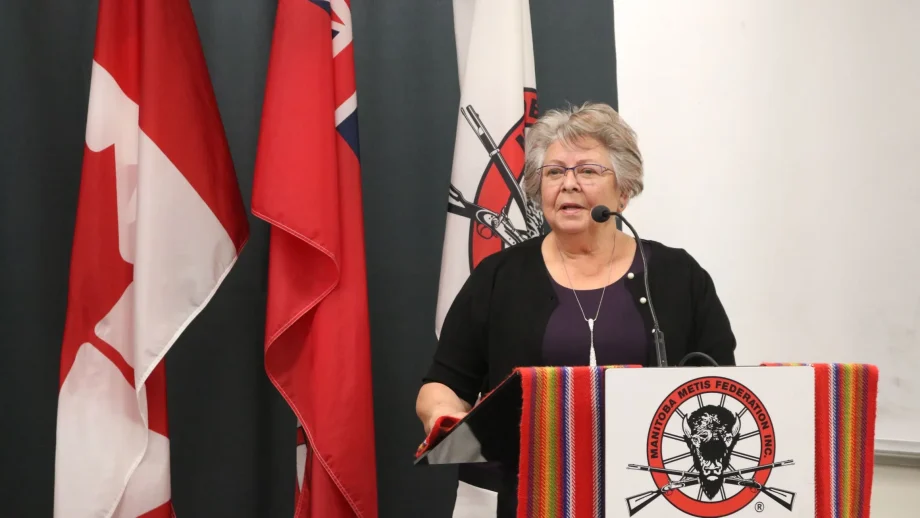
“The challenge of the Ten Years of the Indigenous Course Requirement: Critical Analyses on Mandatory Indigenous Content Courses in Canadian Undergraduate Education SSHRC-funded project is to garner attention and critical reflection on several aspects of the ICR as a global feature of degree preparation at UWinnipeg across its ten years of implementation,” shared Dr. Mary Jane Logan McCallum, Professor of History and Tier II Canada Research Chair in Indigenous People, History and Archives.
Leading this project are UWinnipeg faculty Dr. McCallum, Dr. Ryan Eyford, Dr. Janis Thiessen, Christy Anderson, Dr. Erin Millions, and Dr. Karen Froman.
Launch event and celebrations
With the help of Events, Marketing and Communications, Alumni Affairs, Institutional Analysis and faculties, departments, students, faculty and staff across the UWinnipeg campus, the ICR research group is developing creative ways to mark the occasion.
The group has partnered with the University of Winnipeg Students Association, the Indigenous Students Council, the University of Winnipeg Faculty Association, and two public history organizations to foster dialogue and mobilize knowledge about this unique shared academic experience at UWinnipeg.
The launch event for the Indigenous Course Requirement Collection Archives is open to the public and begins with light refreshments at 2:00 p.m. and the formal launch at 2:30 p.m. on Thursday, September 24, 2026, in 3C00.
In addition, a physical exhibition featuring records from the Collection will be shown at the Archives and an online exhibition featuring community engagement with the ICR records will take place over the course of the year and can be viewed online.
Students registered in ICR classes during the 2026-2027 academic year are invited to one of five celebratory lunches on October 13, 2026, December 9, 2026, January 29, 2027, March 22, 2027, and May 19, 2027.
All departments teaching ICRs will be notified about the lunches early in September and that information, including how students can register for their free lunch through a dedicated website, should be shared with all ICR instructors who can then pass this information on to students registered in their ICR courses.