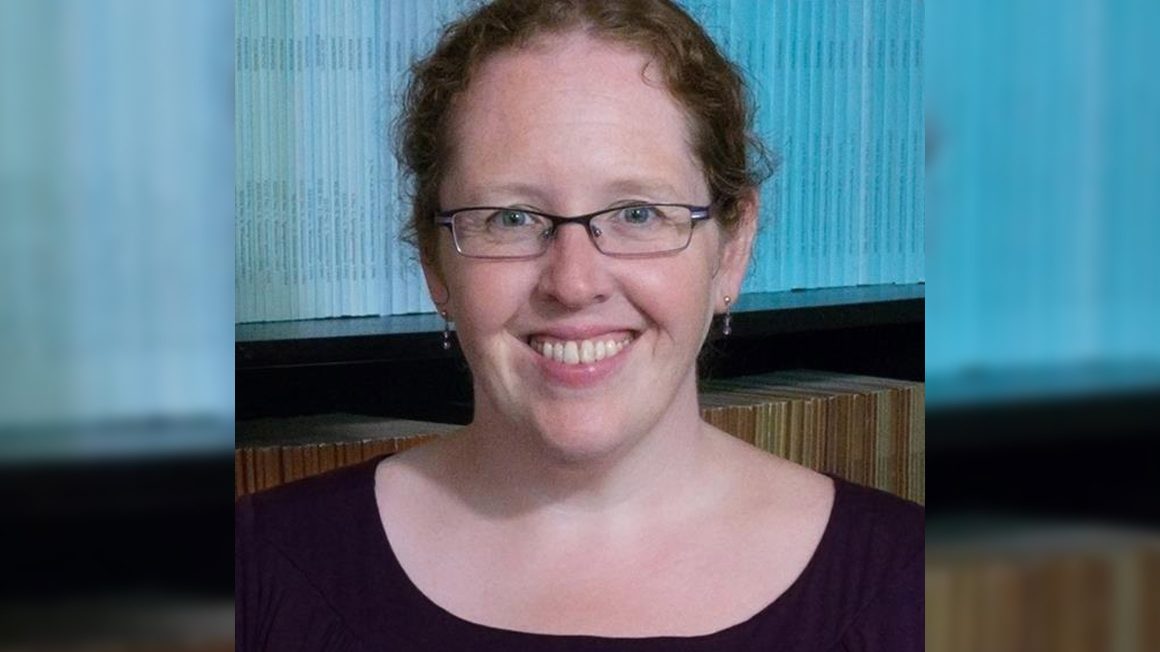
In honour of International Women’s Day (IWD), The University of Winnipeg is proud to honour women in our University community who all make important contributions to our institution, within their fields of study and to the greater community.
UWinnipeg is committed to holding space for diversity, equity and inclusion for women. This year’s theme, Give to Gain, encourages a mindset of generosity and collaboration, emphasizing the power of reciprocity and support.
We take this opportunity to recognize the valuable insights and contributions women from all backgrounds bring to UWinnipeg.
This year UWinnipeg is featuring Dr. Darlene Abreu-Ferreira, Department of History and Dr. Melanie Racette-Campbell, Department of Classics who recently received Social Sciences and Humanities Research Council of Canada (SSHRC) grants. Their research looks at the inequities of gender and race within two different times in history, with themes and patterns that are relevant to the present day.
Dr. Darlene Abreu-Ferreira explores women’s lives in early modern Europe
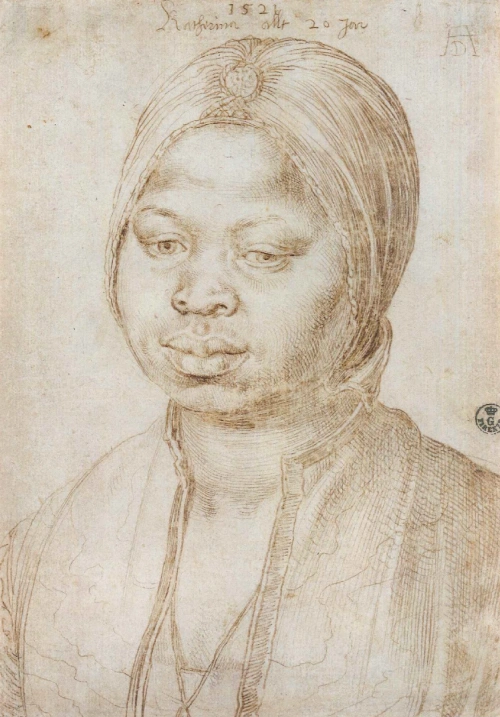
Katharina* – Albrecht Dürer
Very little is known about Katharina, the woman portrayed in the attached image, except that she was 20 years old when Albrecht Dürer sketched her in 1521 during his visit to the home of João Brandão, the Portuguese factor in Antwerp.
Dr. Darlene Abreu-Ferreira’s current SSHRC-funded project aims to fill the gaps in the story of the likes of Katharina and other racialized/enslaved women and their children.
Titled Whitewashing illegitimate births: gender, race, and inheritance in pre-modern Portugal, Dr. Abreu-Ferreira’s study explores various categories of illegitimacy that prevailed in a pre-modern European society, with a focus on early modern Portugal (1550-1750).
She is especially interested in analyzing the mechanisms that were used, in Portugal and elsewhere in Christian Europe, to legitimate the illegitimate for the purposes of inheritance.
In the process, her study will highlight the incongruities of a legal, social, and economic system that condoned the result of illicit sex while condemning those involved in illicit sex, especially vulnerable young women and racialized/enslaved women, in particular. The study addresses two key questions: First, who legitimated whom and why? Second, what does the culture of legitimation tell us about the ways in which early modern society camouflaged – whitewashed – gender and racial inequities?
Dr. Abreu-Ferreira’s research begins with an examination of three types of archival sources from the 16th and 17th centuries: baptism records, notarized petitions for legitimation, and registries of legitimations granted by the crown. This corpus of documentation promises to yield important details about women and children whose lives were affected by the legitimate/illegitimate divide.
In the process, the study will shed light on a distinctly underprivileged minority group, and further our understanding of the construction of gendered and racial identities in the pre-modern world, the legacies of which are still remnant today.
While female slaves were often rendered invisible by their gender, race, and enslaved status, an examination of their illegitimate offspring offers a possible avenue through which we can include these women in the historical narrative. One small step for womankind on International Women’s Day.
Dr. Melanie Racette-Campbell studies gender and sexuality in Roman literature and culture
Dr. Racette-Campbell is interested in gender studies and the study of the city of Rome. Combining these two interests contributes to the larger conversations, in her field and beyond, about the connections between gender and place.
Dr. Racette-Campbell’s SSHRC research on Cicero, Masculinity, and the City of Rome, looks at the written works of the 1st century BCE author, orator, and philosopher Cicero and how he uses places in the city of Rome to express opinions about masculinity.
The idea is that Cicero’s audience would have understood that the place where a man did things defined what kind of man he was.
“For example, leading armed men against an enemy force on the battlefield was a manly act; leading armed men into the centre of Rome to intimidate one’s fellow citizens was not, as abusing one’s power in that way showed a profound lack of self-control.”
Studying how people in the past defined these roles and answered questions about what it meant to be a man can shed light on how we might answer the same questions today.
Dr. Abreu-Ferreira’s and Dr. Racette-Campbell’s research sheds light on women’s voices from the past to help us understand the inequalities that still persist today.