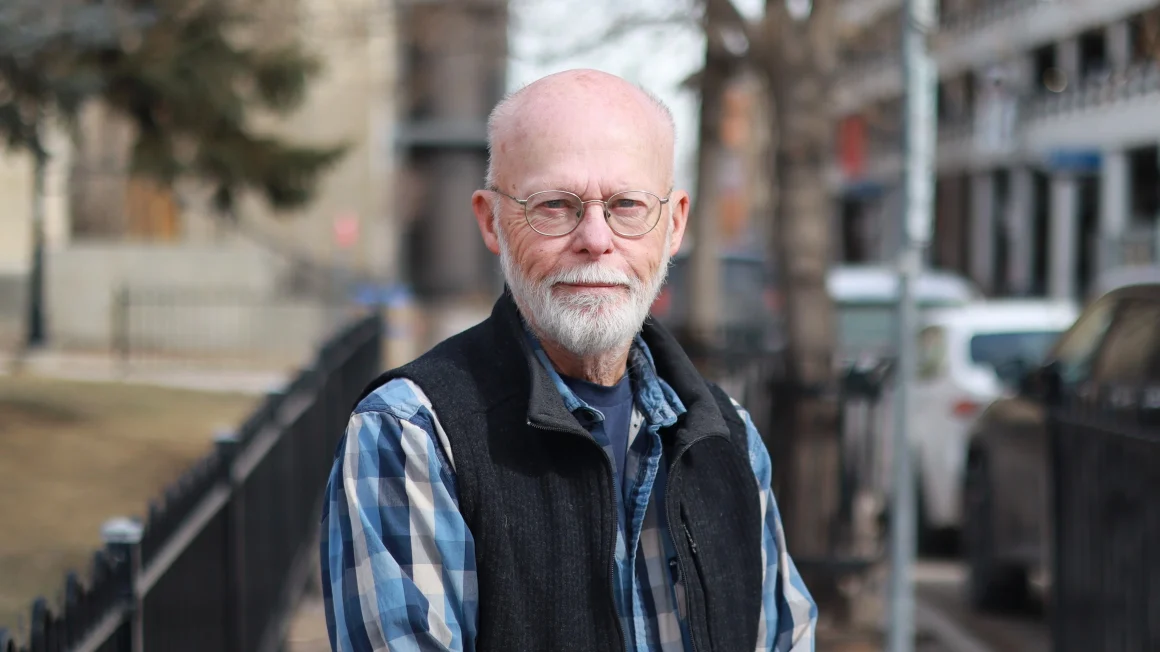
For many people, the term “education system” brings to mind two branches: K-12 and post-secondary. But Dr. Jim Silver always reminds his students of a third, equally important branch: adult basic education, which is for adults 18 years of age and older who didn’t graduate high school.
“Adult education is education’s ‘poor cousin,’ undervalued, underfunded, rarely part of public discussions and debates about education,” Dr. Silver writes in the opening pages of his new book, The Transformative Power of Adult Education (Fernwood Publishing), which he will launch at McNally Robinson Booksellers Grant Park this Thursday, April 23 at 7 p.m. A livestream will also be available.
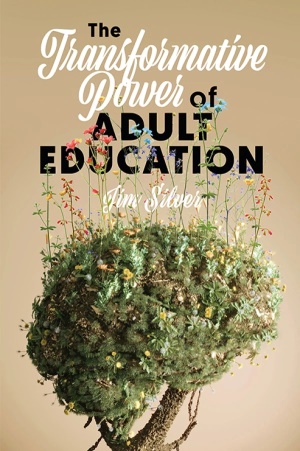
The Transformative Power of Adult Education (Fernwood Publishing)
Dr. Silver, Professor Emeritus in UWinnipeg’s Department of Urban and Inner-City Studies and Research Associate at the Canadian Centre for Policy Alternatives–Manitoba, is a longtime advocate for adult basic education, which he says deserves more government funding and a higher public profile to bring it on par with K-12 and post-secondary education.
For Dr. Silver, adult basic education is transformational because it can break the cycle of poverty, promote reconciliation, strengthen families, improve employment prospects and wage earning, and create citizens who are more informed and active in society. In short, its benefits outweigh its costs.
“We have the evidence to show that adult basic education effectively pays for itself,” he writes, as adult learners move off government assistance and into the workforce, providing the government with expenditure savings and income tax revenue that more than offset its initial investment.
But despite its transformative power, adult basic education remains underfunded and little-known outside of (and sometimes even within) government and policy circles. Dr. Silver wants readers of his new book to see adult basic education as a critical plank in any anti-poverty strategy, and an important contributor to the process of reconciliation.
“It builds self-esteem, it builds self-confidence,” he said. “It produces a sense of optimism about one’s future. It strengthens families. And the children of adult learners do better in school.”
Adult basic education isn’t flashy. Elected leaders score no political points for investments in it, and those living in poverty are often unaware of its existence. But when learning centres do advertise, they’re often inundated with interest.
Doing nothing and continuing the status quo also has a cost.
“There are over 150,000 people in Manitoba whose literacy level is low,” Dr. Silver said. “There’s an opportunity cost there. We’re not taking advantage of the skills they have.”
Book dedicated to educators
Dr. Silver dedicated his new book to “the many outstanding educators working in adult learning centres and adult literacy programs in all parts of the province.” The book will also be of interest to policymakers, academics, community advocates, and members of the general public with an interest in social issues or current affairs.
Dr. Silver began working on the book in 2022. A practitioner of community-based research, he has written extensively on poverty and related issues (social housing, street gangs, community development, alternative education) for decades. He is a plainspoken advocate with a deep well of inspiring student success stories he draws upon to illustrate his compelling research.
We have the evidence to show that adult basic education effectively pays for itself.
Dr. Jim Silver
“Adult education really does transform peoples’ lives,” said Dr. Silver, who was an integral part of the team that redeveloped the old Merchants Hotel on Selkirk Avenue into Merchants Corner, an innovative education, community, and housing hub that is also home to the Department of Urban and Inner-City Studies. “I’ve seen how people who might not have otherwise gone to university can succeed and build better lives for themselves.”
The book is focused on adult basic education in Manitoba, where more than one in four children grows up in poverty. Adult basic education in Manitoba has two main elements: community literacy programming that brings adults to a high-school level, and mature high school diplomas earned in adult learning centres.
These are typically delivered by a patchwork of small, non-profit education centres spread throughout Manitoba, which employ fully certified teachers. Those centres, which do a lot with few resources, are regulated by the Adult Learning Centres Act, a 23-year-old piece of provincial legislation.
“The system for 20 years has been largely underfunded,” Dr. Silver said. “Rather than growing and meeting the needs of more people, it’s shrunk.” However, in the last two years funding has improved. Still more is needed in future years, Silver said.
Dr. Silver said building and maintaining a strong adult education system in Manitoba will require continued public investment, not a one-time infusion. While rural Manitoba is well-served by a loose network adult learning centres, large areas in northern Manitoba are in a “tougher situation” that will require federal investment.
About Dr. Silver
Dr. Silver has a long history of working with community-based organizations in the city. His unique collaborative approach means research is always conducted with—not for—members of inner-city and urban Indigenous communities.
Dr. Silver has been a visionary program builder during his four decades at UWinnipeg, bridging the gap between community and university by establishing a presence in Winnipeg’s North End via Merchants Corner.
He began his academic career at UWinnipeg, graduating in 1975 with a bachelor’s degree in political science. In 1982, he joined UWinnipeg as a faculty member in the Department of Political Science and chaired it from 2006 to 2009. He helped establish an Urban and Inner-City Studies Program at UWinnipeg, and taught at Merchants Corner from 2010 until his retirement in 2019. He was named Professor Emeritus in 2020.
Dr. Silver has published 15 peer-reviewed books, 40 peer-reviewed book chapters and journal articles, and more than 100 non-peer-reviewed articles. He was a key figure in four multi-million-dollar SSHRC (Social Sciences and Humanities Research Council) grants. In 2013, he was awarded the Queen Elizabeth Diamond Jubilee Medal for contributions to the inner-city.
An excerpt from The Transformative Power of Adult Education can be read on the Fernwood Publishing website [PDF: 572 KB].