The University of Winnipeg is proud to honour and celebrate National Indigenous History Month in June.
UWinnipeg is located on Treaty One Territory and the National Homeland of the Red River Métis, in Wiiniibak, Manido Abi. We acknowledge these are the ancestral lands of the Anishinaabeg, Anisininew, Ininiwak/Nehethowuk, Oceti Sakowin/Dakota Oyate, and Michif (Métis) Peoples, that our water is sourced from Shoal Lake 40 First Nation in Treaty Three Territory, and that most of our hydro-electricity comes from Treaty Five Territory in northern Manitoba. The University is committed to the ongoing work of ensuring Indigenous knowledges and perspectives are honoured, and to participating in Reconciliation.
“National Indigenous History Month presents an opportunity to reflect upon, acknowledge, and celebrate the ongoing significant contributions of Indigenous Peoples, communities, and nations,” said Dr. Chantal Fiola, Associate Vice-President, Indigenous. “While we spotlight these in June, we recognize and honour efforts made by UWinnipeg Indigenous community throughout the year. Miigwetch to all those who are contributing to Indigenous brilliance at UWinnpeg!”
Here are some developments from the campus community to celebrate from the past year.
National Indigenous History Month 2025 highlighted the website ShekonNeechie.ca, a website created in 2018 by seven Indigenous historical scholars, including UWinnipeg’s Dr. Mary Jane McCallum, Professor of History and Canada Research Chair in Indigenous People, History and Archives. Dr. McCallum is also a member of the site’s editorial board.
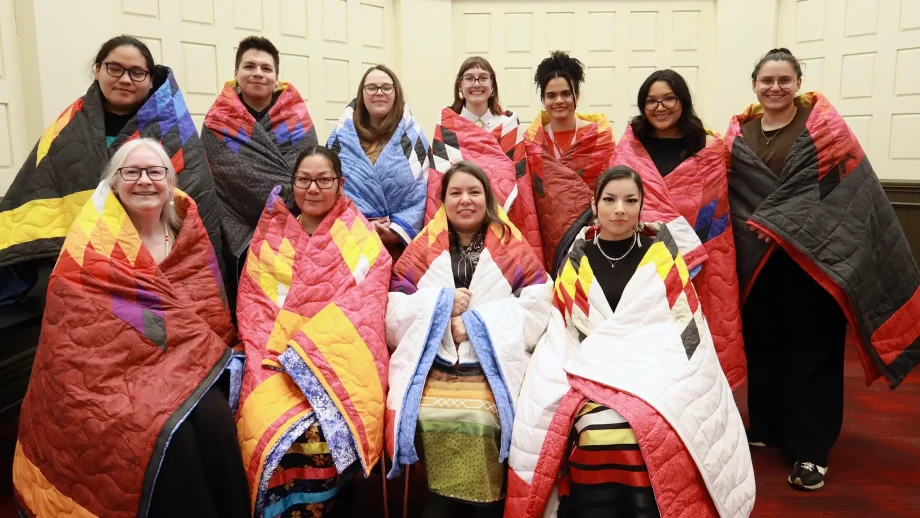
Seven exceptional Indigenous University of Winnipeg undergraduate students presented their research in Toronto at the Innovation Rooted in Culture, 2025 Canada National Gathering. The presenters, Abigail (Abby) Alexander, Flora Easter, Cassidy Lamirande, Olivia Shyiak, Leena Tetrault, Madelyn Timmins, and Brandon Wittmeier, are accomplished students who are either (or both) a Pathway to Graduate Studies (P2GS) or an Indigenous Summer Scholars Program (ISSP) participant and have completed their research under the supervision of a UWinnipeg faculty member.
The first cohort from the Build From Within – Ozhitoon Onji Pennjiiee (BFW) program graduated in June with Bachelor of Education degrees. Through a partnership with the Winnipeg School Division and Indspire, BFW provides Indigenous students a pathway to an education degree along with a full complement of supports and hands-on classroom experiences.
Alum Josh Swain (MSc 23, BSc 21) reflected on his time at UWinnipeg reconnecting with his Métis heritage through .caISES, a campus-run group that supports Indigenous students in science, technology, engineering, and mathematics (STEM). He uses the sense of community he built here in his career as a Policy Development Officer for Toronto Public Health.
The film 1200+ was screened and hosted by Sheila North on October 3 for Manitoba’s Missing and Murdered Indigenous Women and Girls Awareness Day.
There were several campus events for the National Day for Truth and Reconciliation and Orange Shirt Day, including a flag raising, shirt giveaway, craft days, a VR screening of William, a talk by Dr. Mary Jane McCallum on the University’s history with the residential school system, and a book signing by Bruce McIvor.
Cree Senator Mary Jane McCallum and Métis Chef Dean Herkert of Bistro on Notre Dame attended the Indigenous Food Systems course to hear students’ presentations and share their knowledge and expertise with students.
On September 9, the Mastercard Foundation announced a $5 million investment in The University of Winnipeg, recognizing the University’s leadership in advancing education for Indigenous youth. This gift will significantly strengthen the University’s efforts to provide exceptional support and opportunities to Indigenous students.
UWinnipeg celebrated the Distinguished Alumni Awards night, featuring Indigenous alums former Wesmen basketball star and dedicated volunteer and advocate Josh Gandier, and celebrated artist and curator Jaimie Isaac.
The University launched it’s new strategic plan, Meeting the Moment, which consists of five pillars to guide the University through to 2030, including Pillar 3: Supporting reconciliation and Indigenous excellence.
Graduate students in the MDP in Indigenous Development program gathered September 12 to share their summer experiences working with organizations and communities on Indigenous approaches to development in Winnipeg and beyond.
UWinnipeg announced the renewal and expansion of its long-standing partnership with Indspire to support Indigenous education by committing an additional $1 million over the next five years to their Building Brighter Futures: Bursaries and Scholarships program. With matching federal funding, this new investment will total $2 million in direct support for Indigenous students, providing $400,000 annually in awards and bursaries to UWinnipeg students through 2030.
UWinnipeg reinstated Indigenous Community Advisory Circle (ICAC). It will provide vision, leadership, guidance, oversight, and accountability on issues impacting the University’s Indigenous community, external Indigenous community, and the general University community. In 2022, the previous iteration of the IAC ended with a closing ceremony held for members in 2024. The new ICAC held its first meeting in December.
The Wesmen and University of Manitoba Bisons battled at the annual Duckworth Challenge, and also collected donations to support Berens River following a devastating fire that destroyed their school in January.
Caleb White was the winner of the Indigenous History Essay Prize, for his essay Indigenous Students and the Nuclear Family: The Colonization of Kinship at Brandon Residential School, 1900-1959. This annual award given by the Department of History is in recognition of excellent work by a student registered in one of the department’s Indigenous Course Requirement Courses (ICR).
Jennifer Bonner and Tiffany Evans were two of the 131 recipients Louis Riel Bursaries for the 2025-26 academic year. Over $200,000 was granted to the 131 recipients with awards valued between $1,300 and $2,000.
Proud UWinnipeg alum, of Métis and settler descent, Justin Rodger (BA 10, BBA 09) works to reclaim cultural traditions and rebuild community links between Métis, First Nations, and Canadians through purposeful economics. He is president of JRS Industrial and Power Solutions, an original equipment manufacturer (OEM) of medium-voltage grid equipment.
The new Anishinaabemowin Language Immersion Program began in ceremony on January 5, as the first 17 students, supported in community by Elders, faculty, and staff, gathered in Convocation Hall. A feast and sharing time followed the ceremony, which was led by Elders and included pipe, prayer, drum, and song.
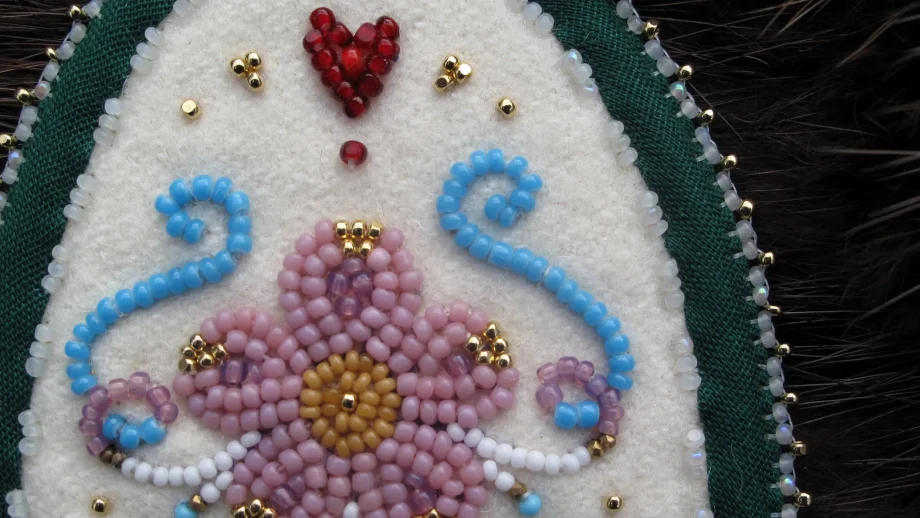
Five brilliant Métis artists honoured Michif culture and knowledge systems while forging new artistic trajectories through their exquisite, beaded creations in Gallery 1C03’s exhibit Beading Métis Resurgence.
Through UWinnipeg’s Urban and Inner-City Studies program, Borden Moneyas (BA 25) learned to look at Winnipeg’s inner-city through a new lens, and to reconnect to his Indigenous culture. Now he is sharing his gifts with the community.
UWinnipeg’s Cole Whiteway (BA 26) earned a McCall MacBain Regional Award. Cole has worked for several years with Jordan’s Principle, which works to ensure protection for Indigenous children and support for families in need, in Berens River First Nation. He provides land-based support, organizing outdoor educational sessions, and recently led the summer camp team on an interim basis. Cole previously created two documentaries for Berens River First Nation.
The 2026 Honouring Indigenous Achievement (HIA) Awards were celebrated in March. New awards were added this year: The Southern Chiefs’ Organization 25th Anniversary Award, as well as the Indigenous Emerging Research Award and the Indigenous Research Excellence Chair.
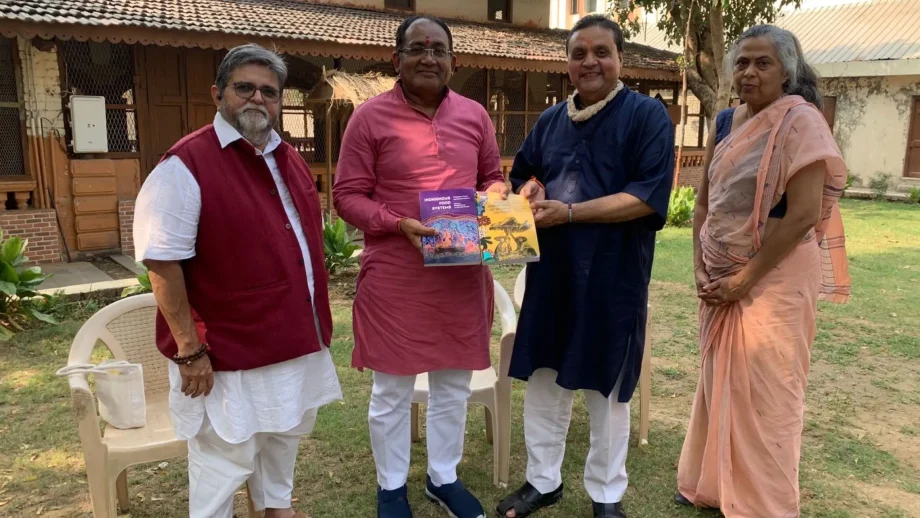
Dr. Shailesh Shukla, Indigenous Studies Associate Professor, led the publication of a new book, Indigenous Insights for Planetary Health and Sustainable Food Systems, with co-editors Priscilla Settee and Noa Kekuewa Lincoln. The book builds upon his previously published resource, Indigenous Food Systems.
Matthew Shoup, a 20-year-old Red River Métis filmmaker in his third year of studies at UWinnipeg, ended 2025 on a high note, scooping up two awards in three weeks. He received the Artistic Visual award at the 2025 Manitoba Indigenous Youth Achievement Awards (MIYAA), and the National Screen Institute (NSI) announced him as the inaugural recipient of the $2,000 Joy Loewen Storytellers Award.
Alum Marika Schalla (BSc 17, BEd 19, PBEd 23) gave a talk at TEDx Winnipeg on navigating and continuing to recover from trauma, and how that journey reshaped her as a person, educator, and leader, and how her relationship with the Land helped her healing.
UWinnipeg’s Faculty of Science and Wii Chiiwaakanak Learning Centre hosted the fifth annual STEM Days, an annual two-day showcase of STEM learning and career options. Over 1,000 Grade 4–8 students from nine schools in participated May 6 and 7 at UWinnipeg’s accessible downtown campus.
The 21st annual Graduation Pow Wow returned to the Duckworth Centre on May 3. Students, faculty, staff, alumni, and community members celebrated the academic achievements of Indigenous students who will be graduating at the spring convocation on June 11 and 12.
Associate Professor in the Department of Criminal Justice, Dawnis Kennedy, was longlisted for the CBC Short Story Prize for her short story nindikwewimin: we are women. It was on of 30 stories chosen from nearly 3,000 submissions.