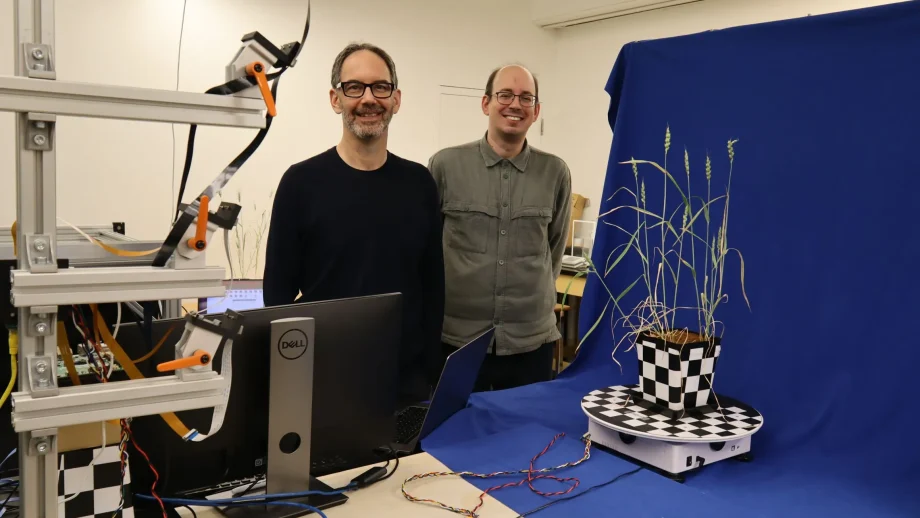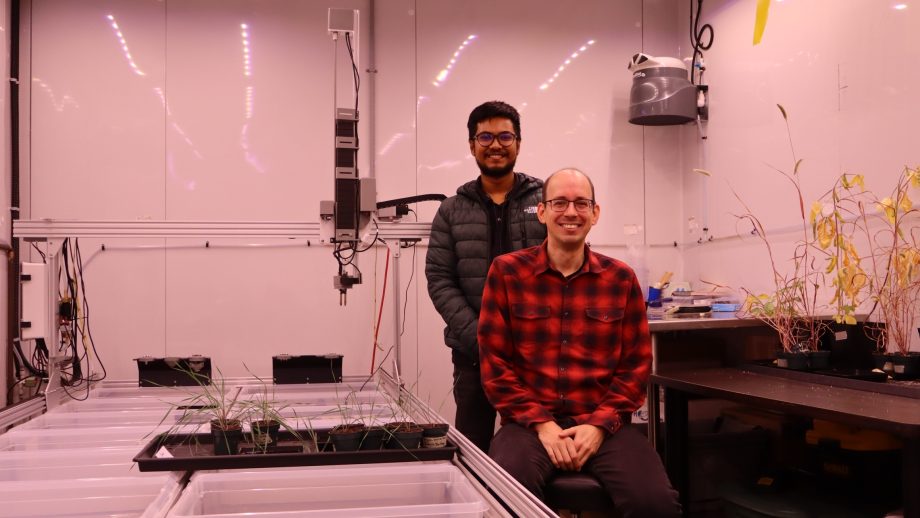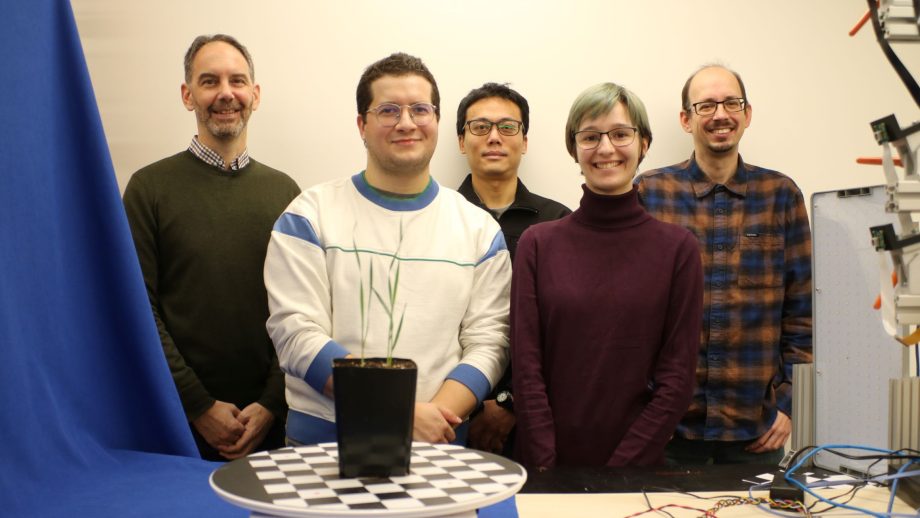

Researchers in the University of Winnipeg’s TerraByte lab are spearheading the creation of a provincial hub for applied research in digital agriculture that will bring together academics, farmers, government, and industry partners to further cement Manitoba’s reputation as a leading agricultural province.
A $460,000 grant from two commodity groups, Manitoba Crop Alliance and Manitoba Pulse and Soybean Growers, has already enabled the Manitoba Consortium for Digital Agriculture (MCDA) to hire its first staff member.
Elena GomezHaro is the MCDA’s Industry and Funding Partner Liaison. She brings 20 years of experience to the role, which she began in January.
GomezHaro has a master’s degree in food science from the University of Manitoba and was an industry liaison and research manager at RRC Polytech’s Prairie Research Kitchen. She also worked at Manitoba Agriculture’s Food Development Centre in Portage la Prairie. Her industry experience includes roles in marketing, quality assurance, and product development with BioChambers, Prairie West Ice Cream, PepsiCo, and Danone.
GomezHaro’s job involves networking with industry groups and grower associations, identifying research opportunities, writing proposals and grants, and organizing and attending events, including an annual symposium. She will also develop short-term and long-term strategies to guide the MCDA.
“I want to build on the significant progress already made in digital agriculture by clearly understanding our current landscape and identifying the key stakeholders who shape it,” she said. “Our goal is to help these stakeholders connect, strengthen their relationships, and, if possible, help them collaborate with each other.”
Computer science is driving agricultural innovation in the 21st century, just as engineering did in the 20th century. By working collaboratively on applied research that unites researchers and aligns with industry needs, everything from funding applications to the development of transformative digital tools can be streamlined, GomezHaro said.
“We are excited to see the MCDA facilitate new collaborations between researchers in the digital agriculture space,” said Katherine Stanley, Manitoba Crop Alliance’s Research Program Manager, Special Crops. “It is our hope that bringing together peers from universities and colleges across Manitoba will ensure farmers’ questions are being answered more efficiently and precisely than ever.”
“We think farmer-led research will lead to a better understanding of how digital tools work and consequently, to which problems they should be applied,” said Daryl Domitruk, Research Project Manager at Manitoba Pulse and Soybean Growers. “Importantly, we seek to calibrate farmers’ expectations and increase their confidence in selecting digital applications for their farms.”
Dr. Jitendra Paliwal, UWinnipeg’s Vice-President, Research and Innovation, said the MCDA “represents an important step in building a truly collaborative, pan-Manitoba ecosystem for digital agriculture.”
“By aligning talent, infrastructure, and partnerships, the MCDA will accelerate the development and adoption of digital tools that enhance productivity, sustainability, and competitiveness, and position Manitoba as a national leader in the future of agriculture,” Dr. Paliwal said.
‘Important first domino’
The MCDA is still in the formation stage. It doesn’t yet have a website, a mission statement, or a governance structure.
“It is not a brick-and-mortar building,” said Dr. Michael Beck, a TerraByte Principal Investigator and Assistant Professor in the Department of Applied Computer Science, who applied for the industry grant. “It’s an important first domino. It’s a consortium of people coming together and working under the same idea.”
The idea for the MCDA began in 2024, when Manitoba Crop Alliance released a three-year strategic plan that included a “hopes and dreams” call-out to identify future opportunities for investment in research and market development.
“They wanted to hear grand, big visions of what should be done in the agricultural sector,” said Dr. Beck, who had noticed similar hubs for digital ag research already existed in other provinces and countries.
“They have these big centres for developing new tools and technologies in agriculture, and they have a massive amount of funding behind them, with cross-regional support from industry associations, governments, and universities,” he said. “I was afraid that Manitoba might fall behind, so I said, ‘Let’s pitch that idea.’”
Digital agriculture might bring to mind drones and autonomous tractors. But Manitoba Crop Alliance’s board of directors liked how Dr. Beck’s proposal advanced understandings of how digital ag technologies can be used alongside traditional areas of agricultural research, like plant breeding, pathology, and soil science.
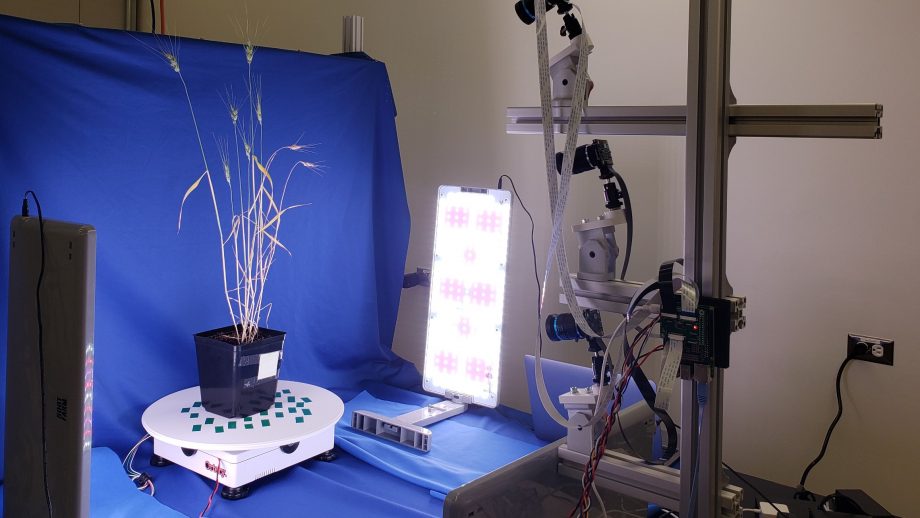
MCDA research areas will also include artificial intelligence, robotics, embedded systems, sensors and cameras, and smart hardware.
“All this stuff is becoming more and more affordable and easy to use, so the question is, how can this be utilized and incorporated into farming,” Dr. Beck said. “That is super exciting.”
Research and ideas at all stages of development are welcome at the MCDA.
“The centre will run the full spectrum of technology readiness levels, from experimental research to proof-of-concept prototypes all the way to having a finished product.” Dr. Beck said.
While the MCDA may initially operate as a research centre or institute within UWinnipeg, the plan is to make it pan-institutional and inter-disciplinary.
“The intention is to invite and include other post-secondary institutions,” GomezHaro said. “We want to foster a collaborative environment. This is for the benefit of Manitoba.”