
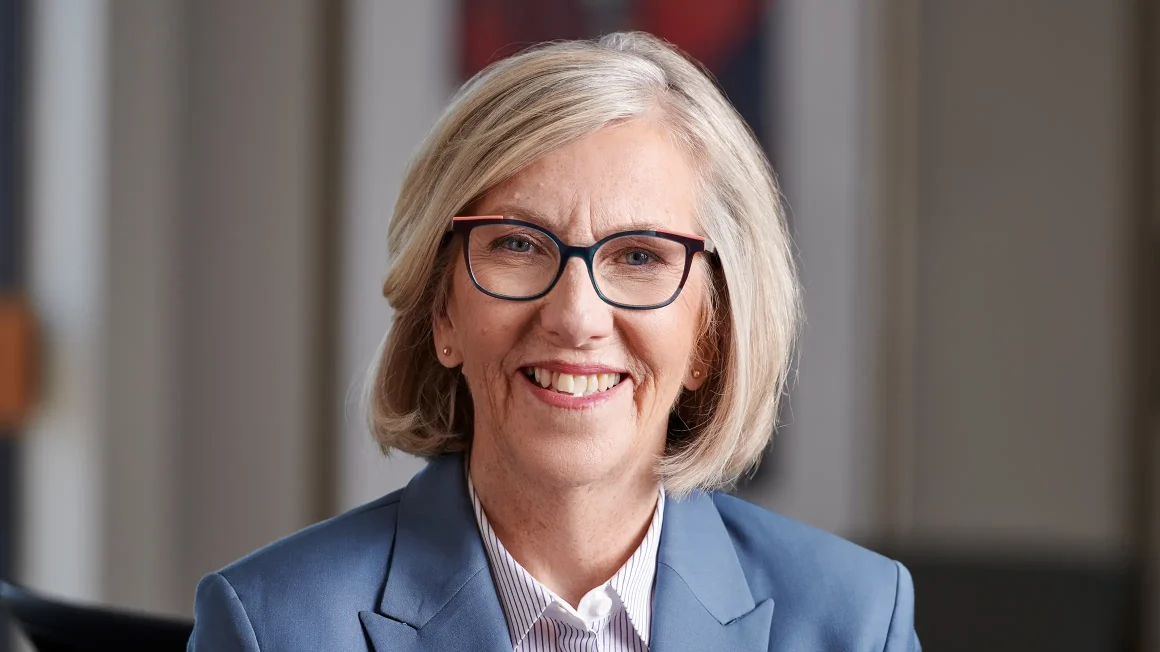
“There was never a doubt that I would go to university,” says Dr. Charlotte Yates (BAH 78), reflecting on her teenage years in the 1970s. “I was always an egghead—academically minded. There was never any question that I would leave home and go to university.”
Growing up in Virden, Manitoba, three hours west of Winnipeg, her path seemed clear. With a full scholarship and sisters already living downtown, the University of Winnipeg was the obvious choice. What began as a bold step away from home became the foundation for a career that would transform Canadian academia.
There was never any question that I would leave home and go to university.
Dr. Charlotte Yates
Over the next five decades, Charlotte devoted herself to research, education, and leadership. After earning her undergraduate degree at UWinnipeg, she pursued a master’s degree at Queen’s University and completed her doctorate at Carleton University. Her academic journey led her to McMaster University, where she spent 23 years as a professor and Dean before moving to the University of Guelph as Provost and Vice-President Academic. In 2021, Charlotte made history as Guelph’s first female president and vice-chancellor. Today, even after ending her term as President, she remains committed to research and is recognized as one of Canada’s leading experts on the automotive industry.
A detour that changed everything
Success didn’t come without challenges. Transitioning from a small town to the big city was daunting. Charlotte felt homesick and overwhelmed by Winnipeg’s size. By the end of her first year, she stepped away from academia to regroup—a decision that changed everything.
She traveled across Europe, visiting family in England and hitchhiking across the continent. Her journey took her to Greece during a time of political upheaval. “When I was in Greece, it was the end of an existing military government, and the country was at the start of a new democracy,” she recalls. “It was really eye-opening to see another world.” That experience sparked her lifelong interest in politics and shaped the scholar and leader she would become.
UWinnipeg ahead of its time
When Charlotte returned to UWinnipeg, she was ready for a fresh start. Recommitting to her degree, she shifted gears and dove into political science, ultimately winning the Gold Medal in Political Science and the Silver Medal for academic achievement across UWinnipeg. Yet political science was an area that, at the time, had very few women shaping the conversation.
But UWinnipeg was different. Progressive and forward-thinking, the Department of Political Science stood out nationally for having two trailblazing women on faculty: Dr. Claudia Wright and Dr. Audrey Flood. Both became invaluable mentors and role models.
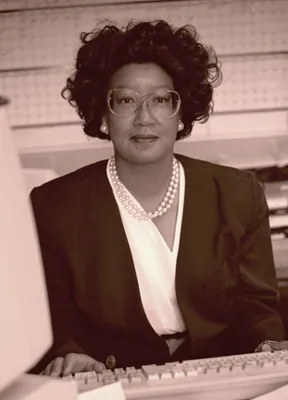
Dr. Claudia Wright (UWinnipeg Archives)
“It was very significant and unusual, for a department to have two women faculty members in political science back then,” Charlotte recalls. “They taught me classes, but more importantly, they mentored me throughout my undergraduate years. Having strong women with PhDs guiding me was an essential part of my education.”
Even with that support, Charlotte faced real challenges as a young woman entering a male-dominated field. She encountered subtle and overt sexism, wage inequality, and deeply gender biased expectations. Later, balancing motherhood with the demands of publishing, tenure, and teaching very large classes added another layer of complexity.
“One thing about an academic job—it’s constant,” she says. “It never really leaves you. It can be all-consuming. But I often reflect on lessons from Audrey Flood and Claudia Wright which gave me the confidence that I could navigate it all and succeed.”
That determination fueled Charlotte’s career. “I’ve always been competitive and wanted to do meaningful work. I wanted my research to engage with the community, to be industry-focused, and above all, relevant. I loved what I was doing, and I still do.”
Research and leadership
Charlotte is recognized as one of Canada’s leading experts in the automotive industry, a field that might seem far removed from political science at first glance. But her research focus on industry, employment and building Canada’s economy was a logical outcome of her undergraduate training with its strong emphasis on economic development and building prosperous and independent nations. As a faculty member at McMaster, she was one of the founding members of Labour Studies in Canada and went on to found the Automotive Policy Research Centre. Her work bridges academic research and practical application, focusing on industrialization, union representation, women at work, and equity.
Her commitment to equity, borne in part out of her own experience, extended beyond research into institutional change. Charlotte played a pivotal role in developing McMaster’s first parental leave policy and led the university’s first study on pay equity among women faculty. These efforts resulted in increased faculty representation and greater institutional support for women’s advancement. “Parental leave has been a game changer for women in all walks of life,” she notes. “We all need it, and it has made a real difference to women’s opportunities.”
Empowering women through leadership
Throughout her career, a consistent theme emerges, leadership and the empowerment of women. Charlotte made it a personal mission to support students, especially women, just as she was supported. “I decided I would make that part of my mission as a professor, and ultimately as a leader” she says. “I’ve mentored many students—not only because they gravitated to me, but because I believe I have a particular value in helping them navigate the stages of their careers.”
The path taken is often not the path you imagined
Dr. Charlotte Yates
Reflecting on her lifetime of work, Charlotte observes significant progress in women’s leadership. “I’ve seen a lot of changes in my lifetime,” she says. “What I’ve learned is that ultimately there will be moments when you think, Why am I doing this? Why do I continue to struggle? At these times, it is critical to have people who support you to continue the struggle, and to reinforce that you have an obligation to continue to advance the rights and opportunities of others in order to improve your own community and the world.”
“The path taken is often not the path you imagined. And the path forward is winding. It is never a straight line. My advice has always been to be open to new and unexpected opportunities and persevere. It can be tough. You cannot thrive on your own. That’s why, for me, I like to give back to students and faculty and my community.”
In honour of International Women’s Day (IWD), UWinnipeg is proud to recognize women from our University community who all make important contributions to our institution, within their fields of study, and to the greater community. This year marks the 115th IWD. The first International Women’s Day was marked on March 8, 1911, when over a million people across Europe came together to support women’s rights, including the right to work, vote,
hold public office and live free of discrimination. In Canada, it’s a time to celebrate progress on women’s rights and to recognize the ongoing work underway to support women and girls’ fully participation in all areas of society.