
2024 year in review
As the year comes to an end, the University of Winnipeg community has a lot to be proud of. We’re re-capping the year to celebrate just some of the incredible people, achievements, and impact our community made in 2024.
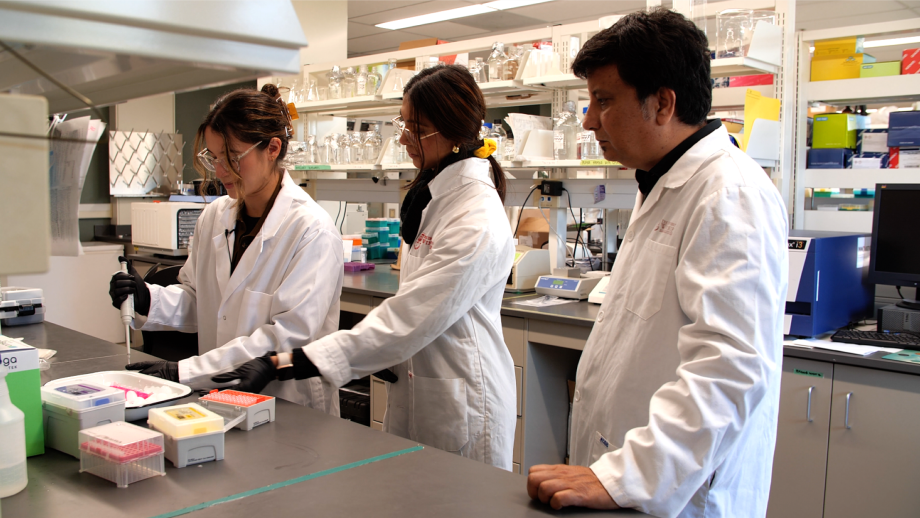

UWinnipeg biology professor, Dr. Anuurag Shrivastav, is currently running a clinical trial in the hopes of bringing a novel colorectal cancer screening test to market. This test could help with early detection, reduce the need for uncomfortable and costly diagnostics, and, ultimately, save lives.
Research at UWinnipeg could lead to new diagnostics and therapeutics for cancer, including a potential treatment for highly invasive breast cancer.
Colorectal cancer is one of the most treatable cancers if caught early. However, it remains one of the leading cause of cancer deaths worldwide if not detected early. UWinnipeg graduate student Hailey Langford is working with Dr. Anuraag Shrivastav to change these grim statistics via a novel blood test that can save lives.
As 2022 comes to a close, we have an opportunity to look back and celebrate the many good news stories and accomplishments The University of Winnipeg community shared this year.
UWinnipeg's Dr. Anuraag Shrivastav and his research team have developed a simple predictive and prognostic breast cancer test that could predict whether there is a likelihood of recurrence in hormone receptor-positive breast cancer patients.
Dr. Anuraag Shrivastav's new blood screening test designed to earlier detect colorectal cancer has been published in an internationally renowned journal.
UWinnipeg's Dr. Anuraag Shrivastav has created a novel blood test that, according to early studies, detects precancerous lesions and colorectal cancer more effectively than other current screening tests. His goal is to reduce the mortality rate of this cancer, which, if detected early, if very preventable.