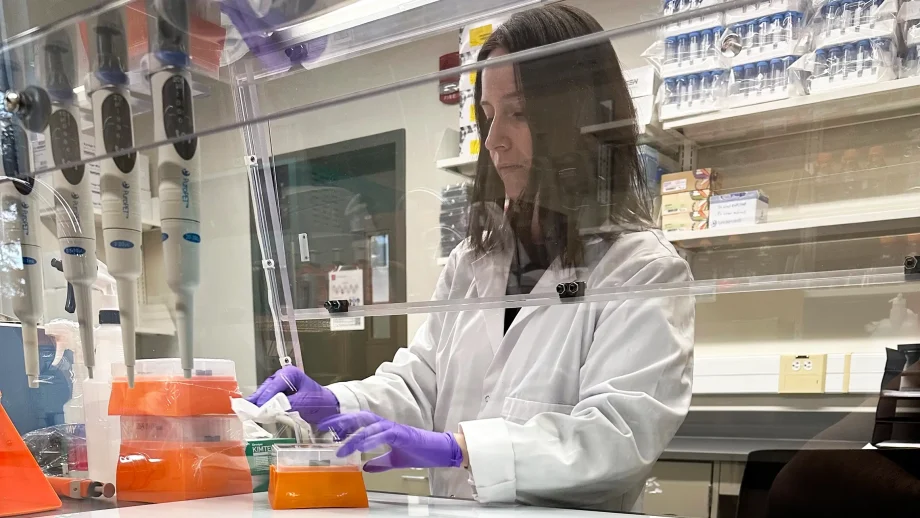
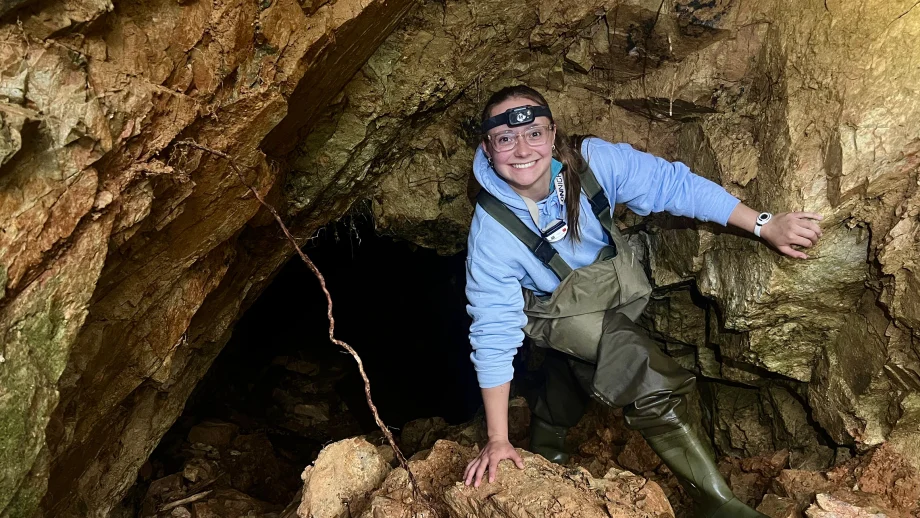
Dr. Emily Chase conducts pioneering research in Lake Winnipeg
Dr. Emily Chase is the first person to ever study algal viruses in Lake Winnipeg, work that will contribute to building more accurate climate change models for the lake.
A steady increase in research funding has paved the way for innovative projects that help to solve complex problems including UWinnipeg's Indigenous research and Equity, Diversity and Inclusion (EDI) research that is helping to shed light on key issues.
Dr. Emily Chase is the first person to ever study algal viruses in Lake Winnipeg, work that will contribute to building more accurate climate change models for the lake.
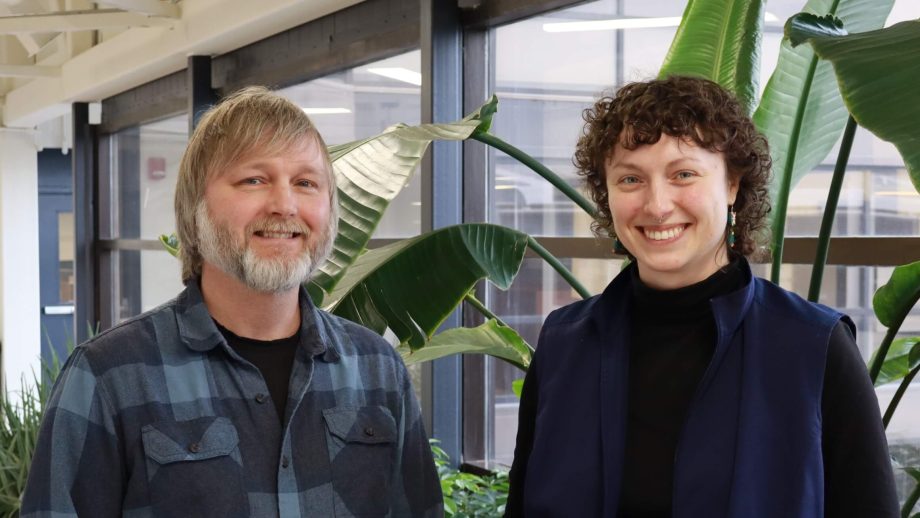
UWinnipeg Urban and Inner-City Studies Associate Professor, Julie Chamberlain, is wrapping up two multi-year research projects – one working to make city and provincial spaces more inclusive, and one that helps neighbourhoods access safety resources.
In the last fiscal year, Mitacs funding to the University of Winnipeg increased from $530,000 to $810,000, helping over 100 UWinnipeg students to participate in research internships.
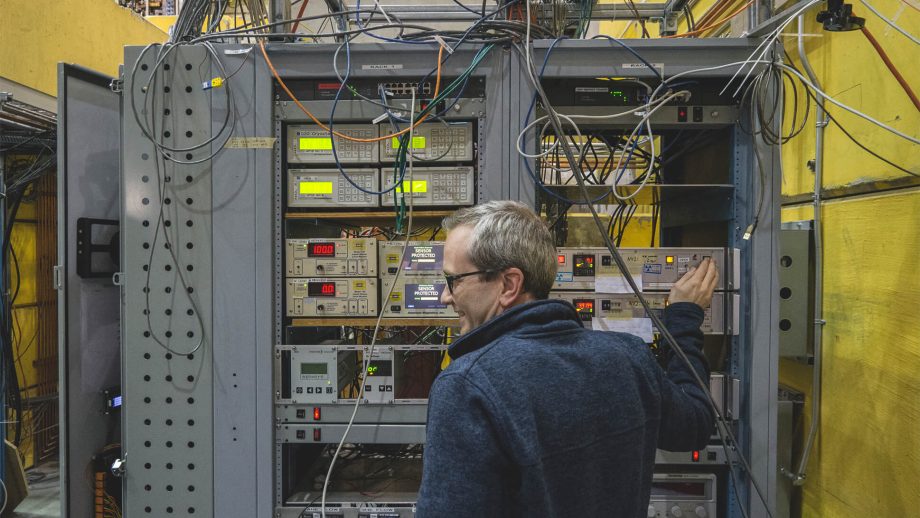
A UWinnipeg physics team has broken a record for particle physics in Canada. Now, they have their sights set on a world record, and hope to gain insight into how the universe was formed.
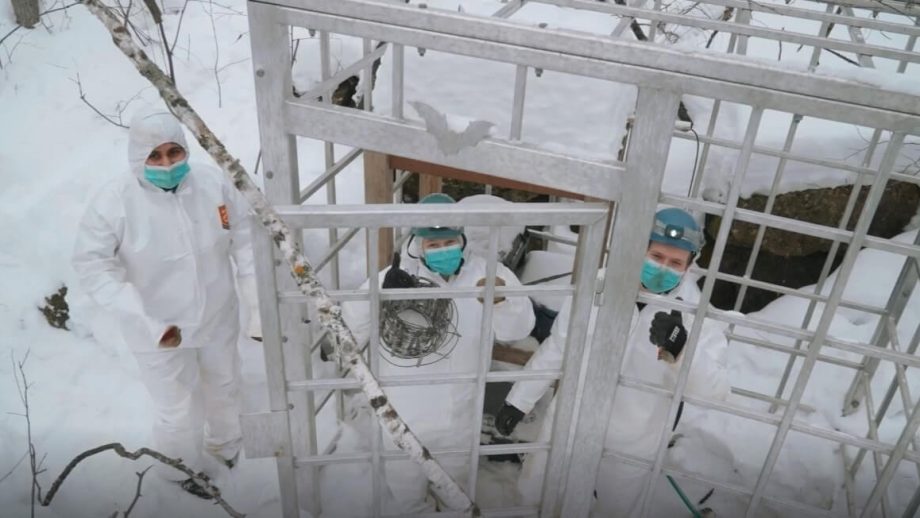
Through his research in UWinnipeg's Department of Biology, Dr. Craig Willis studies Manitoba's endangered little brown bats. This research helps us understand and respond to White-Nose Syndrome - a disease that has devastated this species, which was once common in North America.
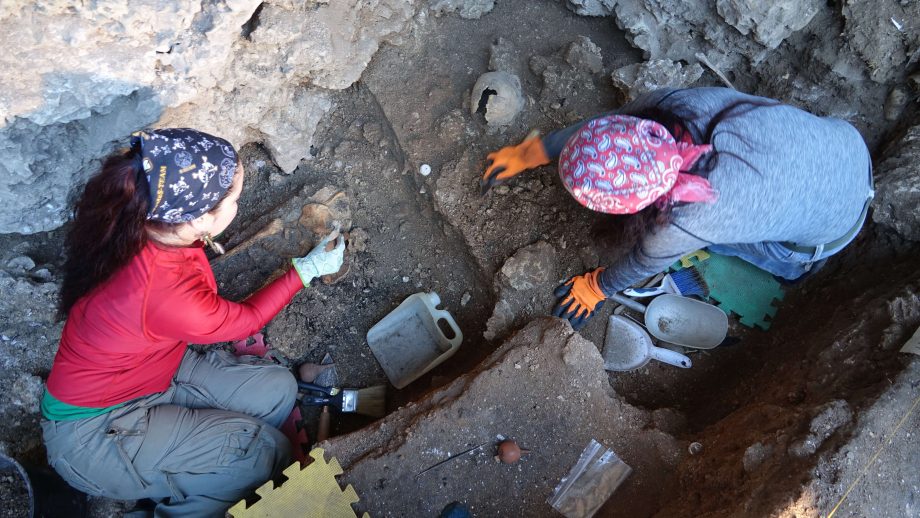
Research published by a team of UWinnipeg academics has the potential to one day rewrite the history books in the Antilles region of the Caribbean.
UWinnipeg adjunct professor, Dr. Kawser Ahmed, hopes a new initiative will bring an end to armed conflict in Myanmar and foster lasting peace in the region. The Conflict and Resilience Research Institute Canada (CRRIC) at UW Global College has received new funding from Global Affairs Canada for their project, Charting a Path to Lasting Peace in Myanmar.
The 2025 Three-Minute Thesis Competition takes place this Friday, March 7 and next Thursday, March 13 with a fresh new format and 16 competitors.
A UWinnipeg research team is helping small businesses in Canada’s forestry sector adapt to a changing climate.
UWinnipeg's Dr. Qian Liu brings AI deep learning research to health care - using it to help solve chemical or biological problems, especially for breast cancer, COVID-19, and rheumatoid arthritis.