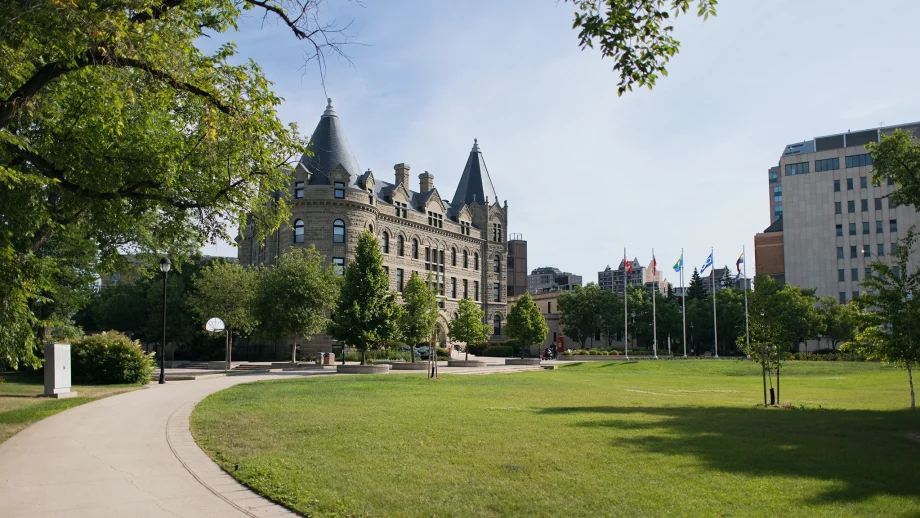

The University of Winnipeg has received a gold STARS (Sustainability Tracking, Assessment & Rating System) rating for sustainability from the Association for the Advancement of Sustainability in Higher Education (AASHE) – the first time the University has achieved this designation.
With more than 1,200 participants in 52 countries, AASHE’s STARS program is the most widely recognized framework in the world for publicly reporting comprehensive information related to a college or university’s sustainability performance. Participants report achievements in five overall areas: academics; engagement; operations; planning and administration; and innovation and leadership.
“STARS was developed by the campus sustainability community to provide high standards for recognizing campus sustainability efforts,” said AASHE Executive Director Meghan Fay Zahniser. “UWinnipeg has demonstrated a substantial commitment to sustainability by achieving a STARS Gold Rating and is to be congratulated for their efforts.”
UWinnipeg joins 22 other Canadian institutions with a gold rating; UWinnipeg’s scoring report can be viewed online. “Sustainability at UWinnipeg is built into day-to-day decisions across academic, administrative, and operational areas of the University,” said Kyle Macdonald, Executive Director, Facilities. “The STARS process helps us measure that work in a meaningful way and identify opportunities to do better.”
How we went for gold
UWinnipeg launched its first formal sustainability initiative in 2005. Since then, the University has made continual progress toward its sustainability goals. The institutional Sustainability Strategy incorporates several well-known frameworks and outlines an ongoing commitment to social and environmental responsibility in four key areas: emissions; procurement and partnerships; leadership development; and knowledge mobilization, all of which are actioned through 19 measurable targets.
UWinnipeg has policies, procedures, and guidelines in place to support its sustainability targets. The University also has five LEED-certified buildings on campus and uses innovative solutions to further reduce reliance on non-renewable energy sources. These initiatives include the development of a biomass heating system, the first of its kind in an urban setting in Manitoba, and the use of smart building technologies that reduce energy demand during low-peak periods while maintaining occupant comfort.
UWinnipeg uses its purchasing power through sustainable contracts wherever possible. UWinnipeg’s food service provider Diversity Food Services (DFS) is a social enterprise that prioritizes sustainability at its core. In 2024, DFS had 52 ingredient suppliers and purchased 70% locally sourced products, exceeding the national average by nearly 50 percentage points. DFS also participates in inclusive and fair hiring practices and has staff participate in recipe development. UWinnipeg also contracts Compost Winnipeg and Mother Earth Recycling for waste management needs, both of which are Winnipeg-based social enterprises.
Within UWinnipeg’s STARS reporting period, the University completed an upgrade of the campus waste collection system by introducing next-generation multi-stream bins, featuring a more user-friendly design to improve diversion and contamination rates, which included increasing the number of multi-stream bins on campus by over 60%. The 2023 Waste Audit found that multi-stream waste bins improved proper sorting by 53% for organic materials and by just over 20% for both recycling and landfill materials. In 2024, the University saw a 51% waste diversion rate from landfill for ongoing consumables, which exceeds our current waste guideline. In addition, we take part in e-waste, battery and glove recycling, have a Used Office Supply Depot and Surplus Furniture initiative, and donate any items that we can to be reused by community members.
UWinnipeg also instills a sustainability mindset for students: 23 out of 27 academic departments have sustainability course offerings and in 2024, 90% of students who graduated had taken at least one sustainability course during their degree. The University also offers Sustainability Ambassador positions, providing students with hands-on opportunities to support campus sustainability initiatives outside the classroom.
“We were also able to capture work the University participated in through the ToyBox Manitoba project and the Campus Sustainability Course, both of which contributed to our score in the STARS Curriculum category,” said Sara Campbell, Campus Sustainability Coordinator. “Together, these efforts show how sustainability is being integrated into both academic learning and the broader student experience at UWinnipeg.”
About AASHE
AASHE is an association of colleges and universities that are working to create a sustainable future. AASHE’s mission is to empower higher education to lead the sustainability transformation. It provides resources, professional development and a network of support to enable institutions of higher education to model and advance sustainability in everything they do, from governance and operations to education and research. For more information about AASHE, visit www.aashe.org.