There is an abundance of diversity and culture to celebrate for Asian Heritage Month in Canada. This month is an opportunity to experience the richness and variety of Asian Canadian communities that have also contributed to building Canada.
This May, discover some hidden gems that the UWinnipeg Library has to offer. This includes a treasure trove of Asian donated books that include Japanese and Punjabi culture and Sikhism collection, from three separate organizations to help promote Asian culture from across the continent.
The donation includes over 70 books originally published in Japan, translated and donated over several years by the Japan Publishing Industry Foundation for Culture; the Read Japan project, a program that promotes knowledge of Japanese culture at research institutions around the world donated 42 books in 2025; the Bhai Kahan Singh Nabha Collection, that contains nearly 100 books on Punjabi culture and Sikhism, donated by the Bhai Kahan Singh Nabha Foundation donated in 2013.
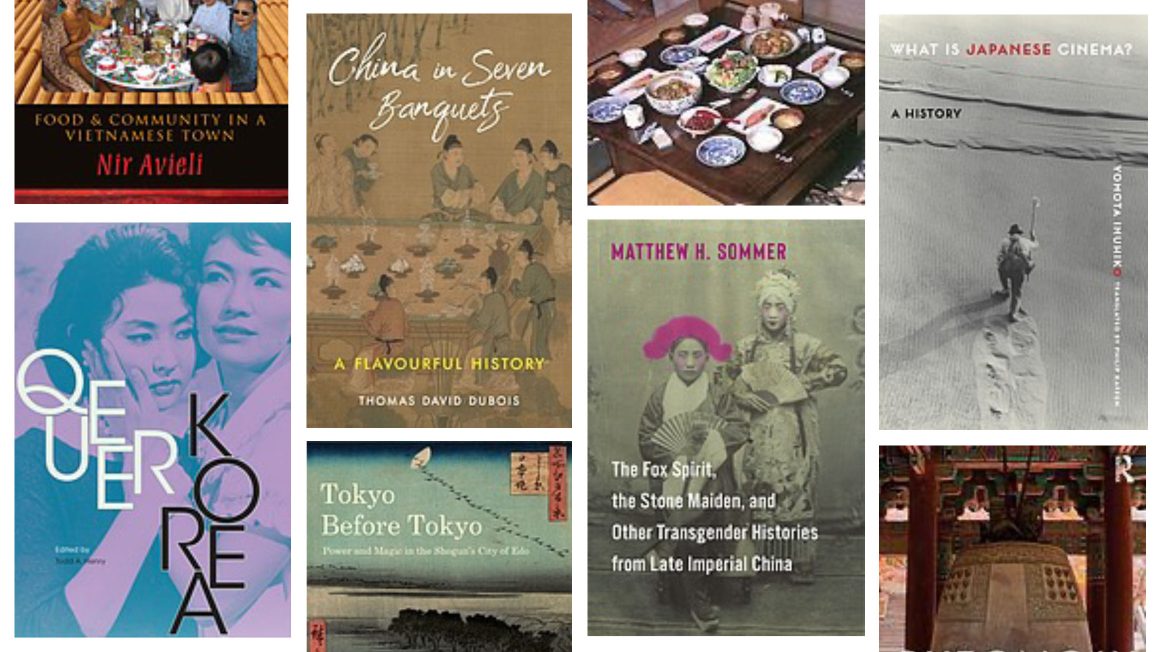
The UWinnipeg Library team also suggests a diverse reading list based on recently acquired books that are unique and highlight the wide diversity of Asian cultures. This suggested list includes:
Rice Talks: Food and Community in a Vietnamese Town, by Nir Avieli
This personal account of cooking and eating in a Vietnamese market town demonstrates the importance of food in everyday life, and how foodways are intertwined with culture, politics, and ways of understanding the world.
The Fox Spirit, the Stone Maiden, and Other Transgender Histories from Late Imperial China, by Matthew H. Sommer
A close reading of Qing dynasty court cases that illuminate historical practices of gender non-conformity, providing new insight into how sex and gender were viewed in 18th and 19th century China.
Tokyo Before Tokyo: Power and Magic in the Shogun’s City of Edo, by Timon Screech
This beautifully presented work pulls from primary source material to depict the rich complexity of Japan’s capital city during the Tokugawa period, from 1590-1868.
Han Kŭt: Critical Art and Writing by Korean Canadian Women, edited by the Korean Canadian Women’s Anthology Collective
The authors in this collected work represent their personal experiences of being Korean, Canadian, and a woman in the early 21st century through poetry, prose, essays, and visual art.
Indian Indies: A Guide to New Independent Indian Cinema, by Immanuel Ashvin Devasundaram
A critical collection on independent Indian film during the 2010s, a time of major political and cultural shifts in India. The indie films of this era unflinchingly explore minority perspectives and controversial topics and are notable for their success outside the sphere of Bollywood.
Modern Japanese Cuisine: Food, Power and National Identity, by Katarzyna J. Cwiertka
This volume examines the development of modern Japanese food over the last two centuries through the impact of wider cultural and political influences.
Queer Korea, edited by Todd A. Henry
This collection of essays establishes a queer historiography in Korea through a cultural lens that goes beyond the usual Western discourse, with a particular emphasis on the impact of the colonialism, nationalism, and authoritarianism that dominated the first half of the 20th century.
Sinascape: Contemporary Chinese Cinema, by Gary G. Xu
An exploration of modern films from China, Taiwan, and Hong Kong in a global context. In addition to providing a close reading of films, this book examines the Sinitic film industry itself as a transnational phenomenon.
Voices of Southeast Asia: Essential Readings from Antiquity to the Present, edited by George E. Dutton
A selection of literary works from over a thousand years of history that demonstrate the wide range of cultural, religious, and ideological influences present in Southeast Asia.
Gyeongju: The Capital of Golden Silla, by Sarah Milledge Nelson
The author charts the history of Gyeongju, the capital city of the Kingdom of Silla from the 4th through the 10th centuries, during which it grew from a loose collection of villages into the urban centre of the Korean peninsula.
Feasts and Fasts: A History of Food in India, by Colleen Taylor Sen
In this work, the author studies thousands of years of history and culture to understand how modern Indian cuisine developed and how such a widely diverse range of foods maintains a distinctly recognizable shared identity.
Zibuyu, “What the Master Would Not Discuss”, According to Yuan Mei: A Collection of Supernatural Stories, by Paolo Santangelo in cooperation with Yan Beiwen
These classic Chinese tales of the supernatural can be read as lighthearted entertainment, or, in the fashion of all good ghost stories, examined more closely for what they tell us about the fears, desires, and beliefs of the time in which they were written.
Edges of the Rainbow: LGBTQ Japan, by Michel Delsol and Haruku Shinozaki
Over 150 photos celebrating the LGBTQ+ community in Japan, which has overcome numerous challenges and is finding growing acceptance in a traditionally conservative society.
The Road to Empire: The Political Education of Khalsa Sikhs in the Late 1600s, by Satnam Singh
An examination of how the growth of Sikh power in the 16th and 17th centuries arose not only from a response to the Mughals, but due to a proactive pursuit of scholarship, independence, and expansion.
What is Japanese Cinema?: A History, by Yomota Inuhiko ; translated by Philip Kaffen.
A concise history of Japanese film from the earliest decades to the modern era, covering both artistic masterworks and popular fare in a range of genres, and examining the influences of both foreign and traditional Japanese cultures on the development of the art form.
China in Seven Banquets: A Flavourful History, by Thomas David DuBois
This book takes readers on a culinary journey through Chinese history via descriptions of extraordinary meals from the last 5,000 years, representing the incredible diversity of Chinese cuisine.
Speaking of the Self: Gender, Performance, and Autobiography, edited by Anshu Malhotra and Siobhan Lambert-Hurley
This essay collection examines a range of historical and modern autobiographical material by female-presenting South Asian authors and how they construct their gender in relational terms, in opposition to the Western approach of presenting the self as fully autonomous, and how this enhances our understanding of the time and place in which the author wrote.
Seoul Searching: Culture and Identity in Contemporary Korean Cinema, edited by Frances Gateward
This collection of essays explores a range of genres in modern Korean filmmaking with an emphasis on cultural context.
Hyakunin’shu: Reading the Hundred Poets in Late Edo Japan, by Joshua S. Mostow
A history of the Hyakunin Isshu, a collection of waka (classical Japanese poetry) widely read in Japan for centuries, including a reproduction and translation of an annotated 19th century edition of the original work.
The Shaolin Monastery: History, Religion, and the Chinese Martial Arts, by Meir Shahar
This book provides an in-depth history of China’s Shaolin Temple and how a combination of economic, political, and religious influences led to its development of a unique form of martial arts.